
AI Content Automation
Content automation that removes the repeated work around ideas.
I build AI content automation around research, review, repurposing, publishing, distribution, and reporting so good ideas move without turning the process into a content factory.
Content automation is workflow, not a content factory.
The useful automation sits around the idea: organizing production, moving review and approvals, repurposing approved work, publishing across channels, and bringing performance back into the next decision.
The taste, point of view, and final judgment stay human. The system handles the repeated coordination around them.
Workflow
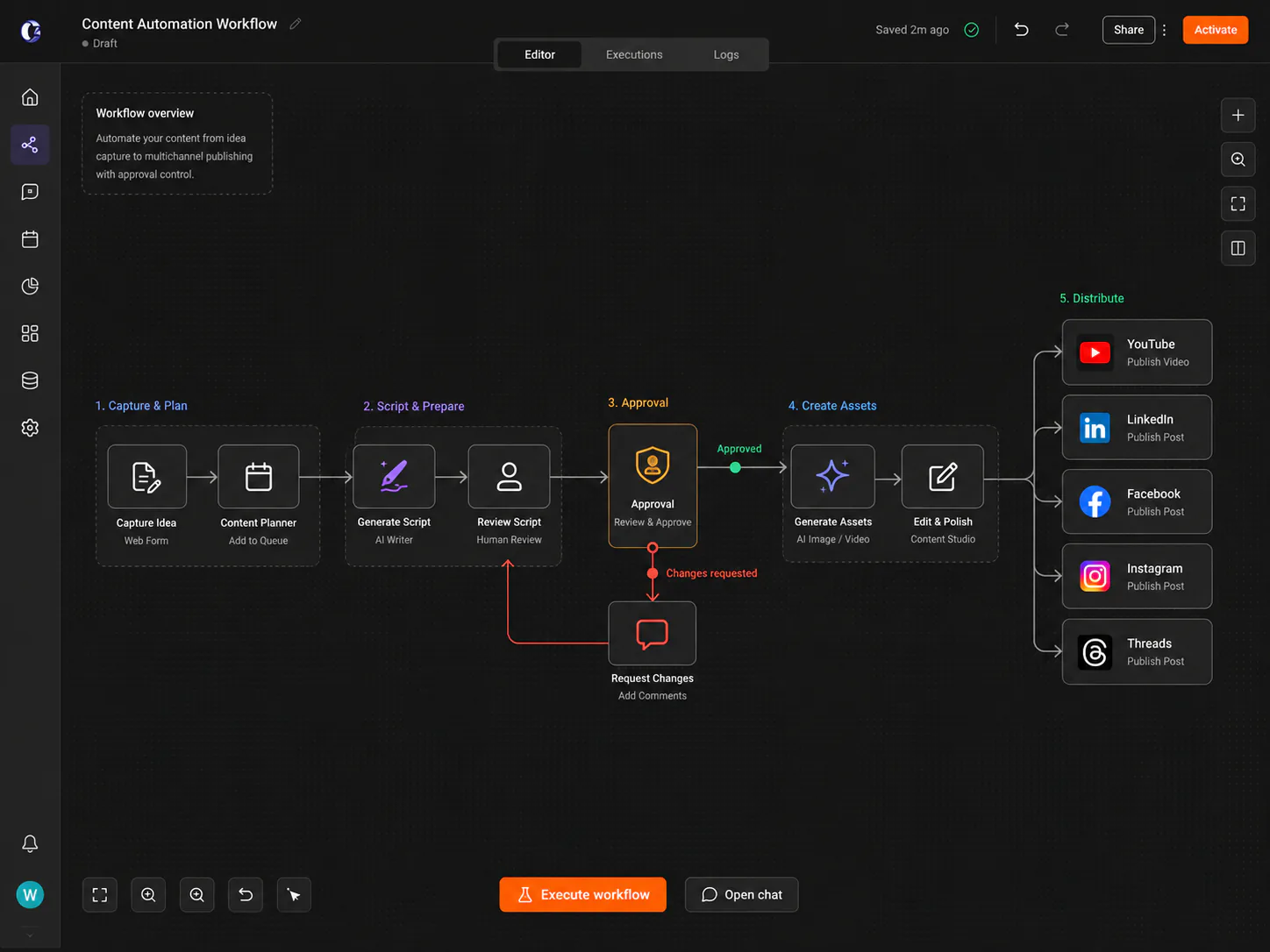
The system around content should know what stage an idea is in, who needs to review it, what changed, and what happens next. That removes coordination work without automating the judgment.
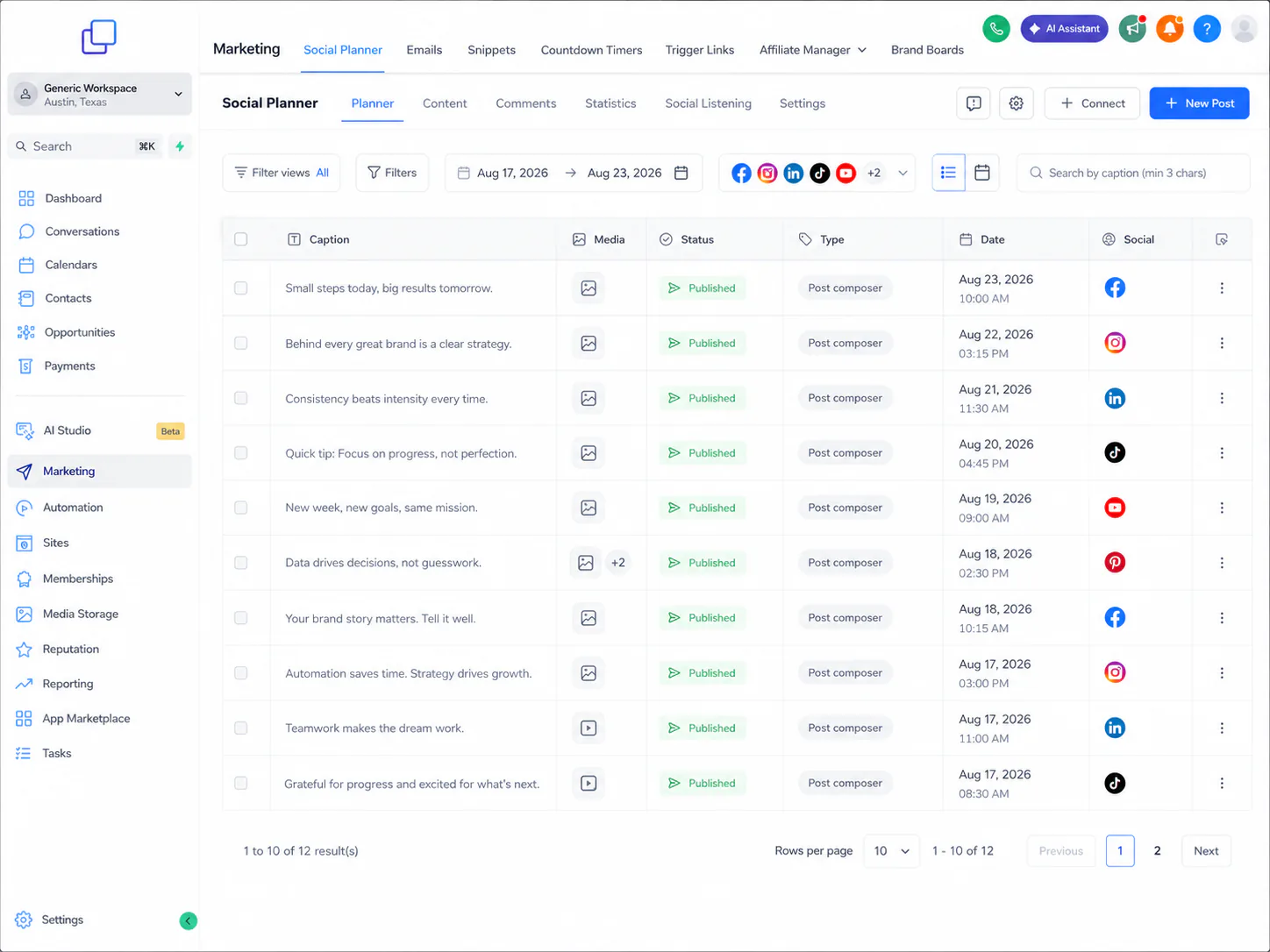
Content library
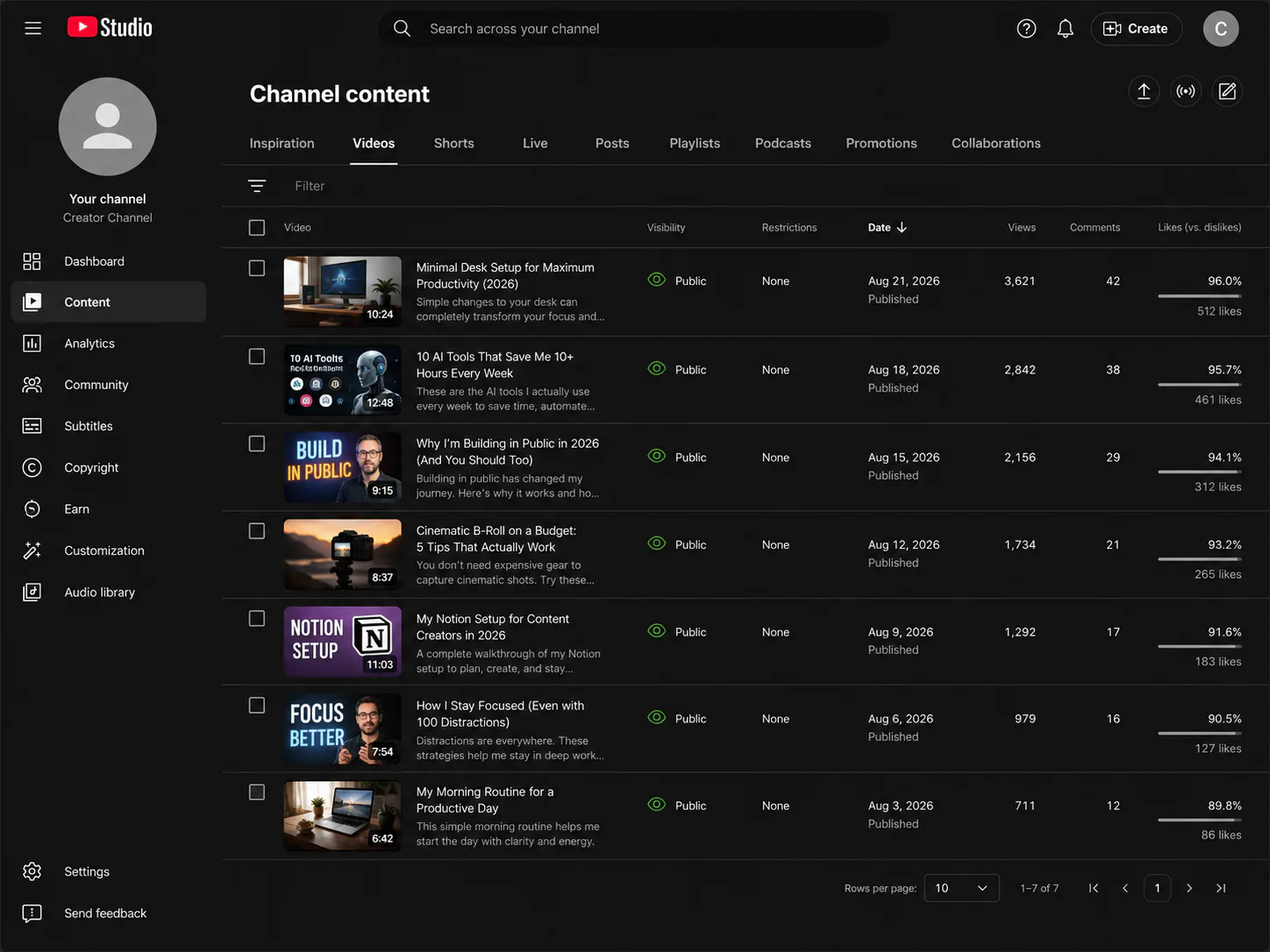
Published work should remain organized after it goes live. A useful library keeps status, format, owner, destination, and performance context attached to each piece.
Channel overview
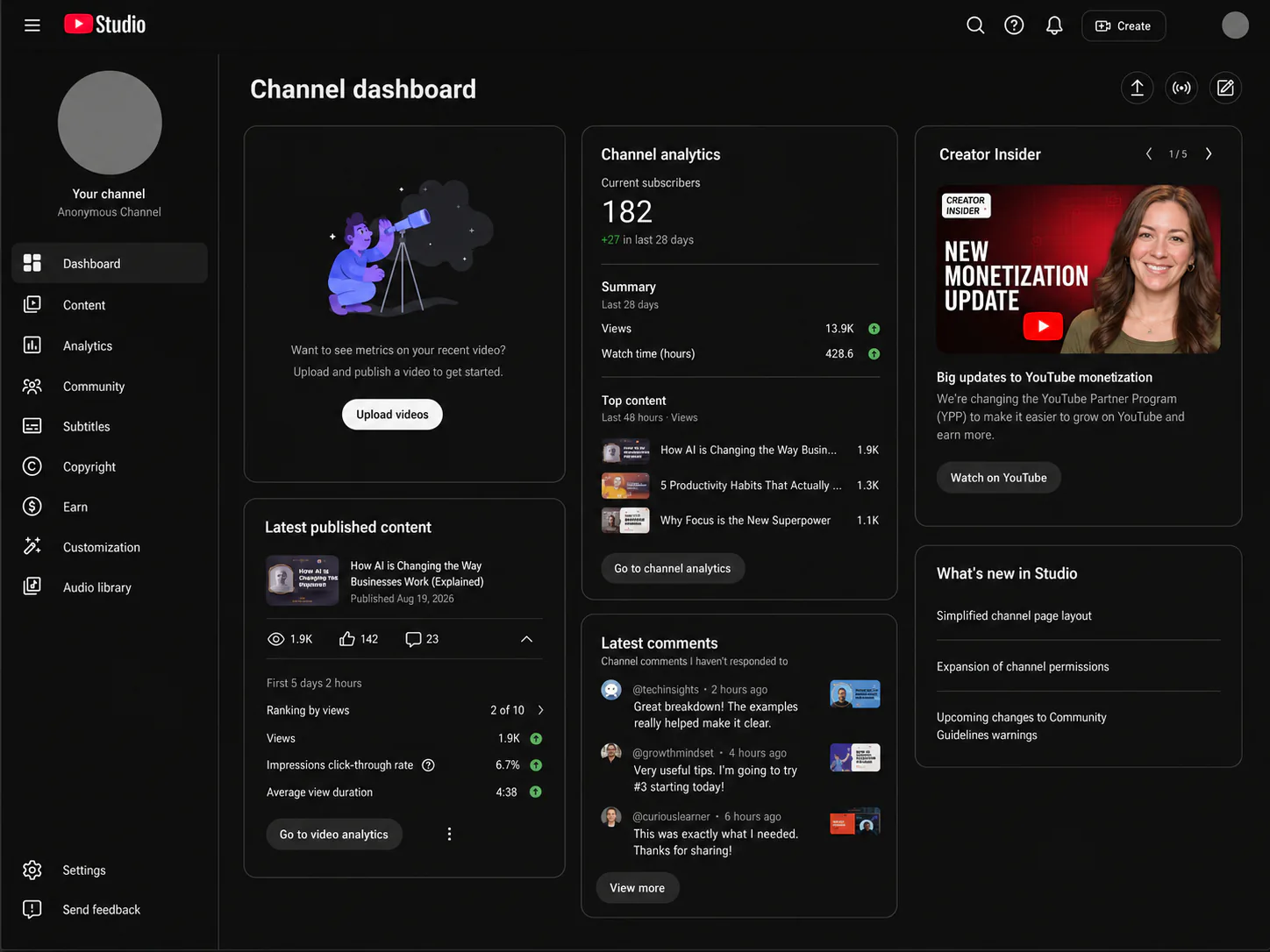
A channel dashboard should show what is being produced and how the whole system is performing without forcing someone to rebuild the same view from scattered reports.
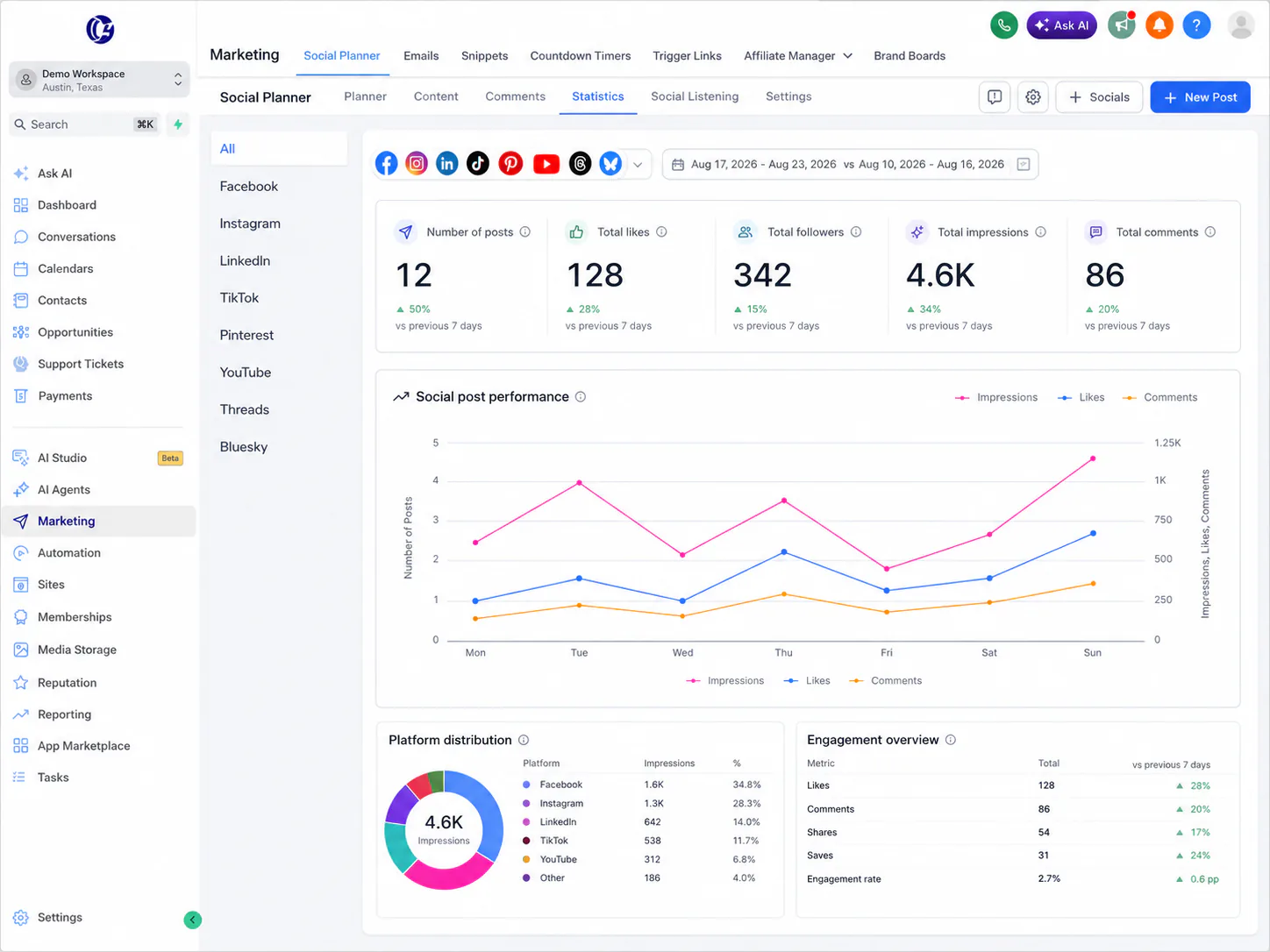
Performance feedback
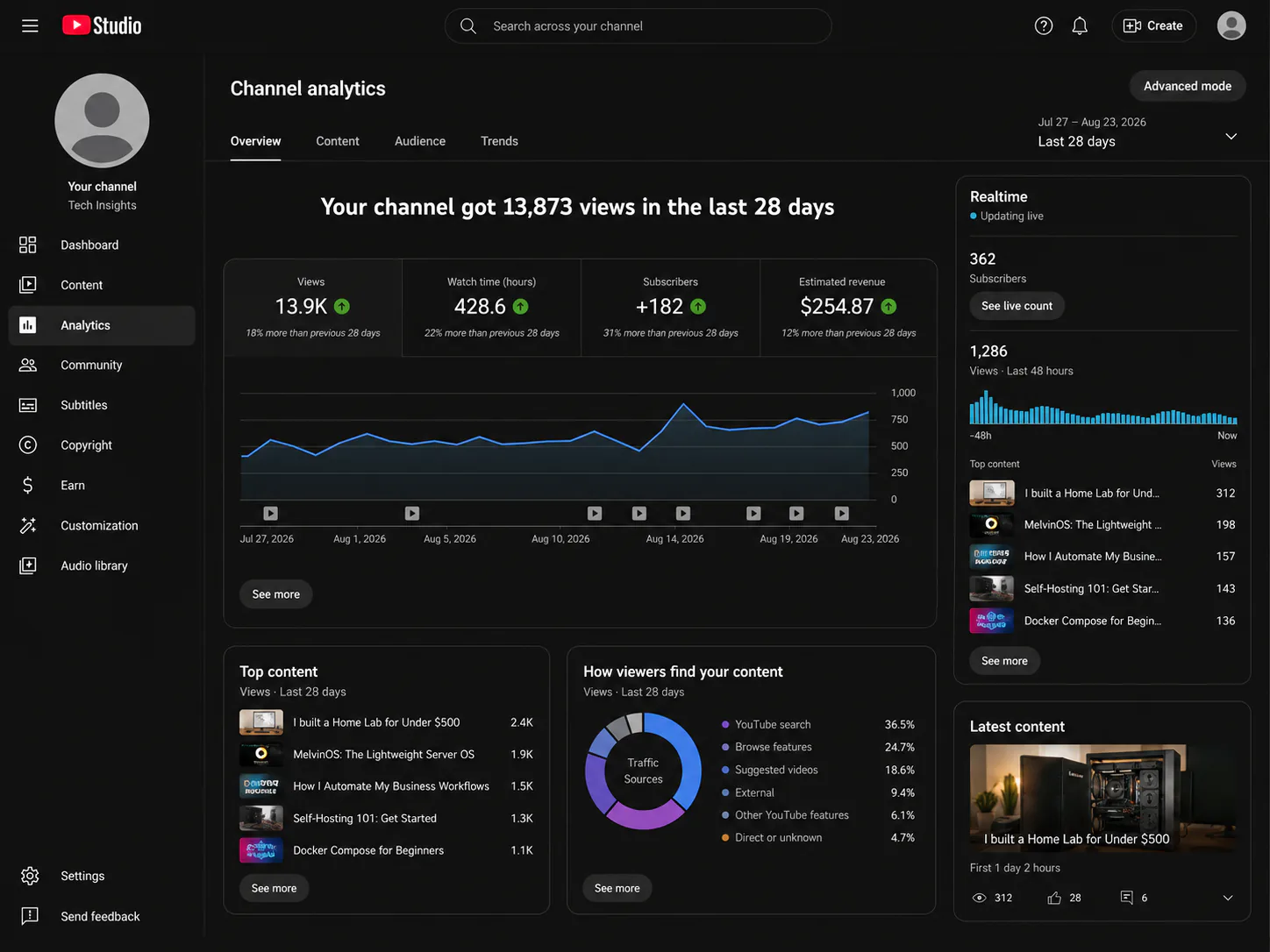
Views alone are not enough. Retention, engagement, watch behavior, and topic performance can become feedback for what to make, change, or stop doing next.
Distribution
One approved idea should be able to move into the right channels without being copied, reformatted, scheduled, and tracked by hand every time.
Learning across channels
Distribution should create a return signal. Reach, engagement, comments, follower movement, and platform differences help show what deserves another iteration.
Content operations need version control and editorial ownership
Content automation is the system around research, approvals, repurposing, publishing and measurement. It is not the act of generating unlimited copy. When multiple channels depend on the same idea, the difficult parts are traceability, attribution, editorial accountability, permissions and keeping each output genuinely useful for its audience.
How decisions are made
Build an editorial state machine, not a one-click publishing bot
Give every idea an owner, source material, intended audience, content type and approved claim boundary. Draft, review, revision, approval, scheduled and published should be explicit states, with a person responsible for transitions that affect the public site.
Separate reusable facts from channel-specific editorial decisions. A useful video outline, LinkedIn post and website article should not be the same paragraph pasted in three places; each should serve a different reading experience.
Protect the publishing pathway. Store credentials outside documents, limit who can authorize publication, log revisions and allow a rollback or unpublish process for factual corrections.
Worked-through scenario
Example: one webinar becomes several approved assets
A recorded webinar contains a useful customer question, a technical demonstration and a claim about performance. Automatically turning the transcript into ten posts could amplify a misleading number or publish a quote without context.
01
Collect source material
Store the recording, transcript, approved presentation and speaker notes with a clear provenance link and permission to reuse the material.
02
Produce distinct drafts
Extract the core problem and evidence, then create channel-specific outlines; flag numerical claims and quotations for human verification.
03
Review and release
Send the drafts through editorial and any required legal or client approval before scheduling. A rejected or changed claim must update every dependent draft.
04
Learn from distribution
Associate each published asset with its original brief and channel; record useful response signals and revise the next editorial plan rather than duplicating the same format indefinitely.
What I would test: Test missing asset permissions, outdated source facts, simultaneous reviewer edits, expired API tokens, partial multichannel publishing and accidental retry after an asset is already live.
Illustrative implementation walkthrough, not a claim of an additional completed client project.
Scope and acceptance
What a delivery scope should include
- A content inventory and approval-state workflow with source provenance.
- Channel-specific publishing checklists, duplicate-prevention rules and revision history.
- A reusable brief, distribution calendar and feedback report tied to actual published assets.
Evaluate editorial cycle time, approval rework, preventable publishing errors, the proportion of assets with verified sources and meaningful engagement by channel. Publishing more assets is not automatically better content.
Practical questions
Can a content automation workflow publish without a reviewer?
Technically it can in some tools, but public publication should follow the organization's permissions and editorial risk. A human gate is especially important for client claims, quotations, sensitive information, regulated topics and material derived from an uncertain source.
How do corrections propagate to repurposed content?
Maintain a source record and links to derivative assets. When a claim or date changes, flag every dependent draft and published item for review instead of assuming changing the master document updates the website, YouTube description and scheduled posts automatically.
Evidence and references
Provides related automation patterns. It is not a claimed public deployment of a complete YouTube or editorial approval pipeline.
Technical documentation: YouTube Data API documentation for authorized publishing and video metadata. Platform features, eligibility, and limits can change.